Glasgow will this week host the twenty third edition of the Commonwealth Games with a compact, budget-friendly, format stretched along the River Clyde using existing venues.
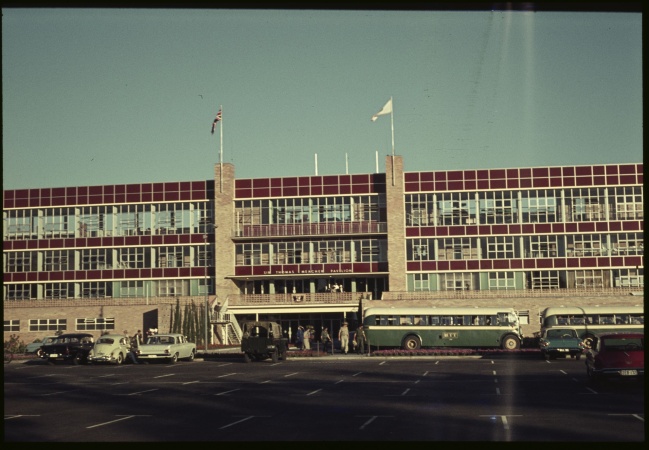
In contrast, Perth’s hosting of the 7th Commonwealth and Empire Games in 1962 sparked a wave of significant infrastructure projects. With many of the buildings built for the 1962 games still standing today, the games have left an architectural impact on this city.
Beatty Park Aquatic Centre, the 150-house athlete’s village in City Beach, Perry Lakes Stadium, Perth Airport, the Fremantle Passenger Terminal, a velodrome at Lake Monger and rowing course on the Canning River are but some of the projects either built, or significantly upgraded, for the Games.
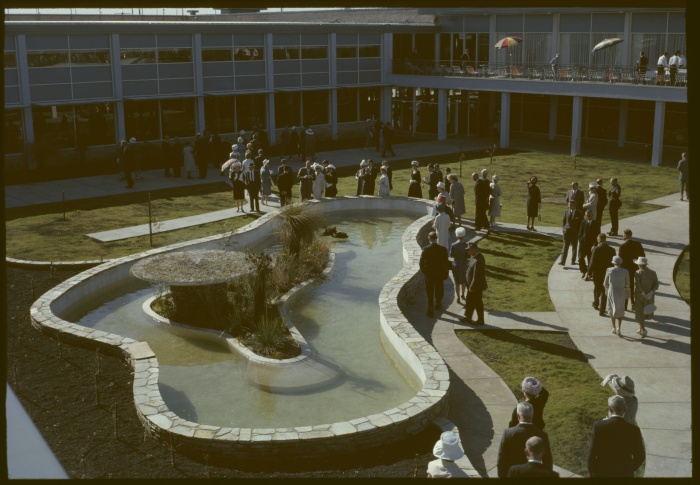
The State Library’s photographic archive gives a fascinating window into how these shiny new space-age buildings were perceived by Western Australians at the time.
In order to handle an influx in visitors by air, the Commonwealth provided one million pounds for upgrades to Perth Airport in the leadup to the games. Much like the America’s Cup in 1987, the fabric of Fremantle was also impacted by the games, with a cutting-edge new second stage of the Passenger Terminal opened in time to receive passengers.
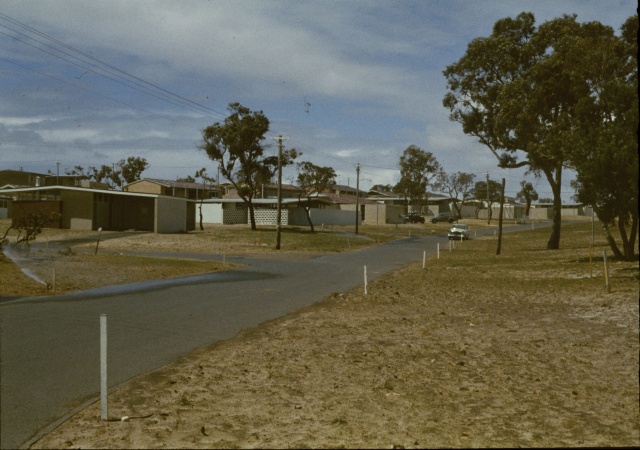
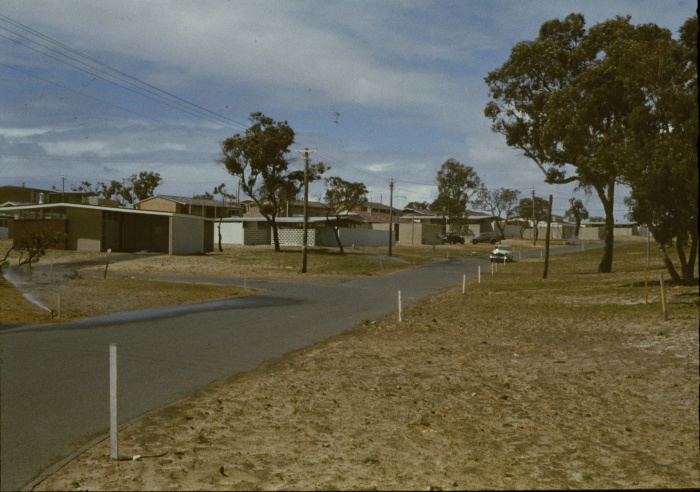
Housing the visiting athletes was a key challenge for the Games Organising Committee, chaired by Perth Lord Mayor Sir Harry Howard. Howard and Town Clerk William Allen Green leveraged the games to provide legacy infrastructure projects for Perth. The Perth City Council contributed one million pounds to the athletics stadium at Perry Lakes and a further 200, 000 pounds worth of land for the athletes village built in City Beach.
Forty local architects submitted designs for simple but striking modernist housing in the athlete’s village, with local firm Silver, Fairbrother and Associates winning the 1000 pound first prize. Following the games, the homes were sold to the public, with some of these mid-century gems still standing today.
With no suitable swimming pool in Perth, the purpose-built Beatty Park Aquatic Centre was also built for the games. The facility featured an Olympic-sized pool, a mixed-use diving and water polo facility and a shallow pool for learners. Cutting edge at the time, the diving pool featured an underwater room with a glass window so that judges could view divers underwater. The swimming arena housed 5500 spectators, with temporary stands upping capacity to 7000 during the games.
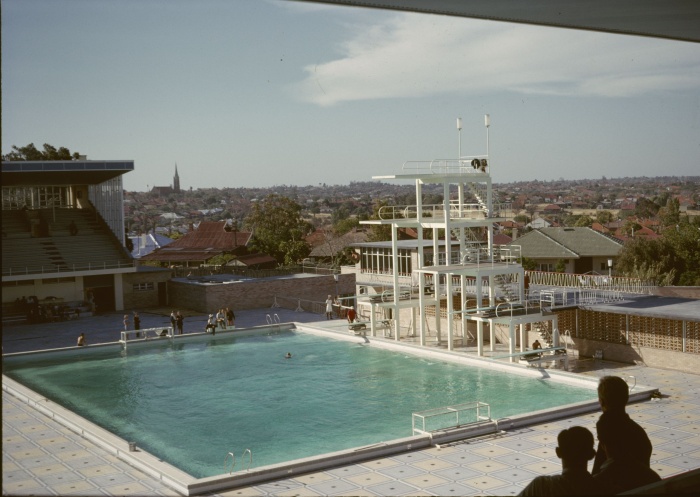
Curiously, Beatty Park’s ability to house so many people gave the venue a short-lived tenure as one of Perth’s premier concert venues. Throughout the 1970s it hosted gigs by Deep Purple, The Bee Gees, The Kinks, Roy Orbison and the Jackson 5.
Partygoers at The Raffles Hotel today may also not realise that they are drinking at the site of the Commonwealth Games 2000-metre rowing course. The Canning River was specially dredged for the games and a purpose-built rowing pavilion (still standing today) was established to host rowing events.
Up until its demolition in 2009, Perry Lakes Stadium in Floreat was perhaps Perth’s most visceral reminder of the games. According to the Official Report published at the conclusion of the event, organisers deliberately retained gum trees on the previously swampy site to broadcast “a truly Australian flavour” to the world. Broadcasting was a key consideration in the new stadium given the increasingly popularity of TV in Australia. Platforms were specifically built to provide the best vantage points for cameras – a relatively new and cutting-edge consideration.
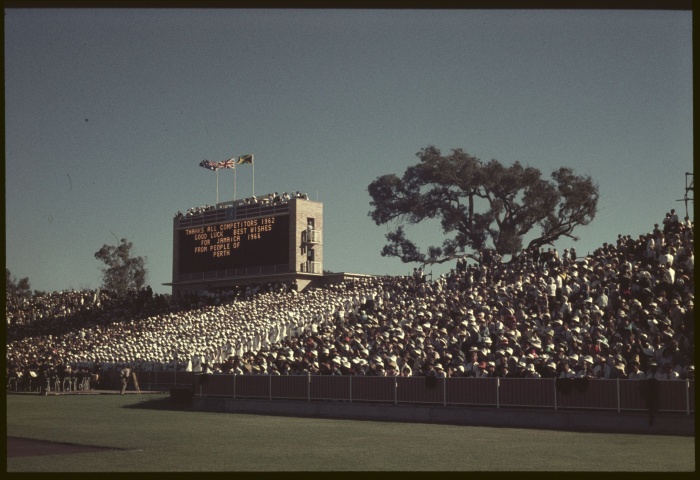
Like Glasgow, Perth also adapted preexisting venues in novel ways during the games. Wrestling was held on elevated platforms built over the tennis courts in Kings Park, lawn bowls were held at the Dalkeith Bowling Club and fencing held in an army drill hall in Victoria Park. Kings Park would also provide an idyllic road cycling course.
As you drive, walk or cycle around Perth during the 2026 Glasgow Commonwealth Games, don’t forget to keep an eye open for clues as to the lasting impact of 1962 on our city today.