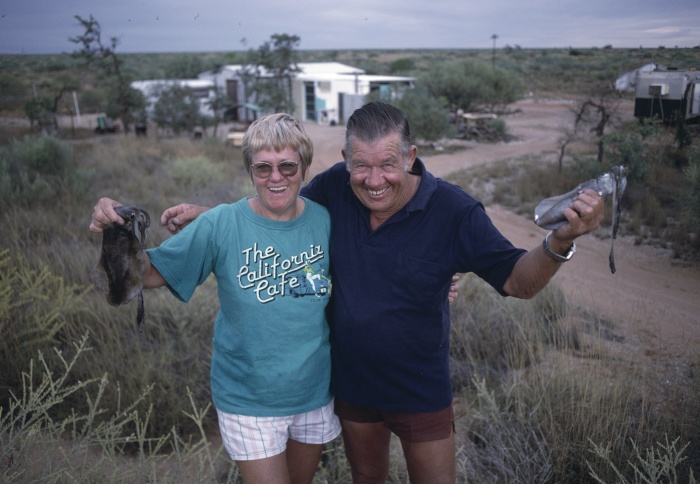
Among the priceless glass negatives, boxes of Polaroids and precious 35mm slides that make up the State Library’s 70,000 strong photographic collection there is a universal truth: people love holding fish in front of cameras.
But what compels people to hold up their catch in these photos? And why – like the moment a toddler blows out their first birthday candles – are these scenes such a staple of our photo albums?
A primal display of lunch? A pre-Tinder boast? Or something deeper and more revealing about our state’s economy and recreation habits?
The State Library’s heaving bucket of fishy photos offers a compelling glimpse into Western Australia’s relationship with all things piscatorial. It serves as a reminder of ancient fishing practices, a timeline of our commercial fishing industry and a repository of happy snaps from recreational anglers.
So throw a line in with us as we drift through the State Library’s fishiest photos.
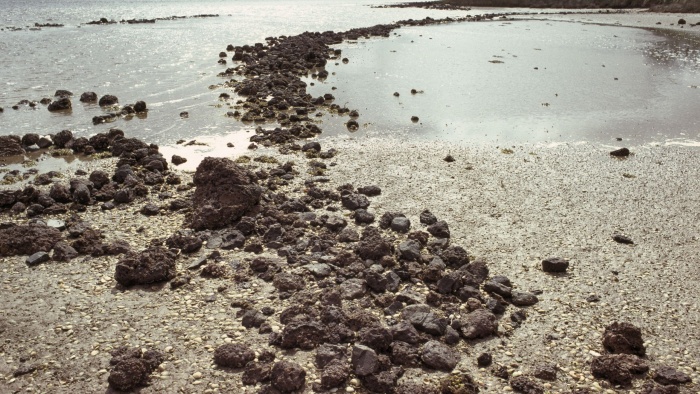
Richard Woldendorp’s 1979 photograph of the ancient fish traps in Kinjarling / Albany offers an important reminder that fishing has taken place on this land thousands of years before colonisation. However, it is in the voices and memories of Aboriginal elders that this knowledge lives on.
In the Library’s current exhibition Kinjarling Djinnang Ngalak: Country Sees Us, Menang elder Vernice Gillies reflects on the importance of fishing to the Menang community. In her oral history, mentioning fish some 48 times, Vernice explains of the fish traps:
“This was a place where people came together to eat, a bit like a party. To eat, to tell stories. The men would do the business of the tribe and celebrate. Have a massive feed; shellfish, fish, kangaroo, all sorts of other, foods around here… But the other scientific information that we know is that our people, 10,000 years ago, had this scientific knowledge to actually build these semicircles out of this, almost like an iron stone, and build them in such a way that at high tide, the water and the fish would wash over, and they’re built in such a way that there are holes between the stones. And when the tide was ebbing, those little holes would allow the fingerlings to escape through. So, there was always fish here...”
Despite the abundance of endemic fish and local knowledge, some of Western Australia’s earliest settlers put significant energy into importing both European fish and techniques.
As outlined in Glen Power’s 2024 book Trout in Western Australia, a who’s who of early colonial WA society were linked by, of all things, trout.
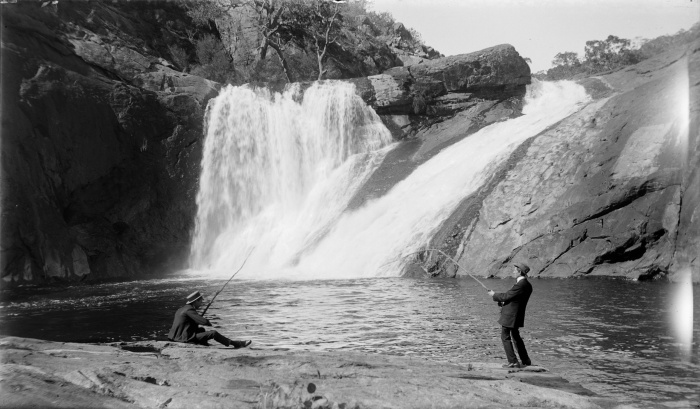
In January of 1874 Western Australian Governor Frederick Weld visited Ballarat where he was particularly taken by fish breeding ponds in the town’s Botanic Gardens. Weld was a keen fly fisherman, a hobby he pursued while Governor of New Zealand. Inspired by these ‘acclimatisation’ ponds, Weld set about importing 15 English Perch to Perth via steam ship. He then arranged for trout eggs to be sent from Tasmania to Perth via Mail Steamer. They hatched on arrival and were set free in a stream near Mt Melville, Albany, becoming the state’s first recorded hatchment of brown trout.
The Forrest family were also captivated by trout. William Forrest, Sir John Forrest’s father and the great great grandfather of Andrew ‘Twiggy’ Forrest, built WA’s first trout hatchery on family land in Picton, just outside of Bunbury, in 1894.
Like Weld, both Sir John and William Forrest supported the importation of trout ova by WA Commissioner of Fisheries and marine biologist William Saville Kent. Kent would send tiny trout eggs on epic journeys from Tasmania: first via mail steamer from Tasmania to Melbourne, then via train from Melbourne to Albany, and eventually onward to hatching ponds in Picton.
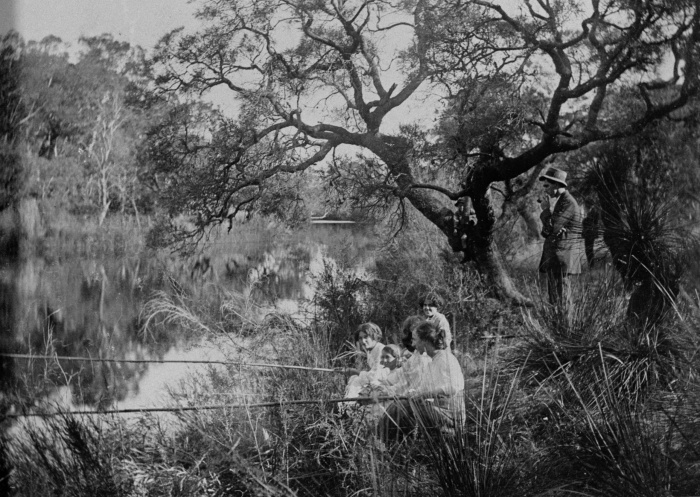
While these prominent settlers were responsible for the introduction of trout to Western Australia, recreational fishing in both salt and freshwater has long been an accessible pastime loved by many.
By the 1890s WA’s first size limits were introduced for recreational fishing and as Joseph Christensen recounts in the Historical Encyclopaedia of Western Australia, fishing ‘parties’ on the Swan River and trips to ‘seaside resorts’ of Rockingham, Mandurah, Bunbury and Albany became increasingly popular.
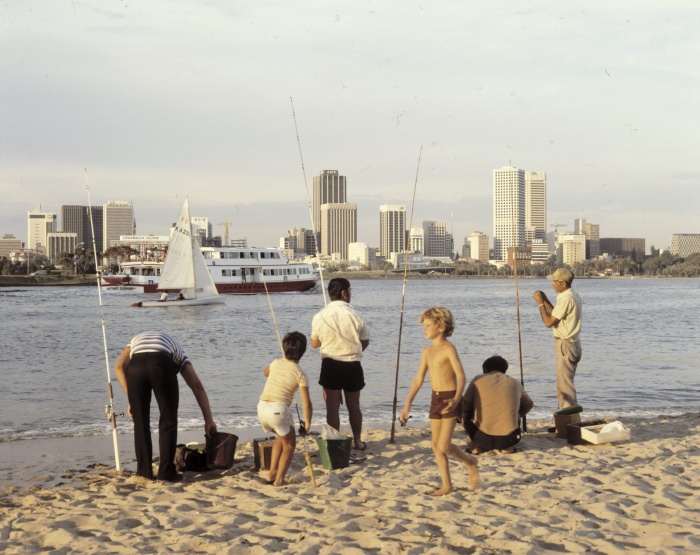
With the only barrier to entry being a bucket and a line, the archive is dotted with people of all ages, ethnicities and backgrounds. It is perhaps the affordable, accessible nature of fishing that has made it such a popular subject of photographs in our archive.
Over the decades, and still to this day, jetties and rock walls have continued to hum with kids and adults alike in search of a free feed, peace and quiet, and an Instagram photo.
There is however, no such thing a free (fish) lunch, and alongside our love of recreational fishing, Western Australia has developed a formidable commercial fishing industry.
Salted and dried dhufish and snapper were exported to Asia from the Abrolhos Islands from as early as 1840 by merchant mariner Anthony Curtis. By the early 20th century, population growth spurred by the goldrush, commercial iceworks and new fishing fleets led by Italian and Eastern European migrants, would increase the viability of commercial fishing in WA (Sally R. May, The Historical Encyclopaedia of Western Australia).
According to the Western Australian Fishing Industry Council, by 1900, Western Australia had 191 boats and 401 fishermen registered as commercial fishermen.
As May details, World War 2 would also spur on the development of commercial fishing. During this period of food scarcity, the Department of War invested in fish canning industries, including crayfish in Geraldton and salmon in Albany.
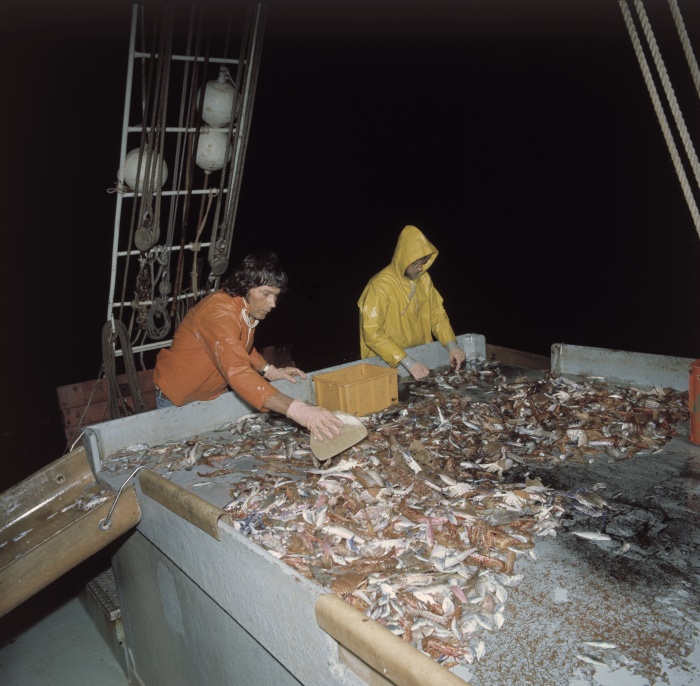
The influence of post-war migrant families from Italy and Greece continues to loom large on our fishing industry today, particularly in Fremantle, Geraldton and the state’s north. The Library’s archive includes images from legendary WA brands and exporters such as MG Kailis, who were instrumental in putting WA seafood on plates right around the world.
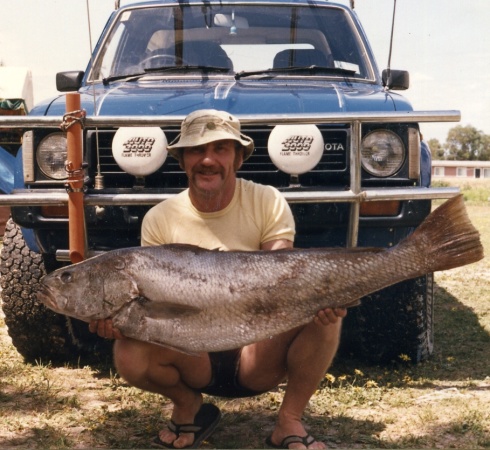
So before giggling next time you are sent a photo of a proud niece, uncle or sibling holding an underwhelming fish, consider the proud tradition that photo is a part of.
Our fishing photos aren’t just a mindless boast. They’re a record of our sustenance, livelihoods, and a hobby that we hold dear. Or perhaps a record of a fleeting moment of calm and solitude in an otherwise wavy world.
Snap. Go fish.




Topic