
Lessons from History? Imperial Milestones and Historical Responsibility
Next on
Fri 4 Dec
10am-5pm
Location
State Library Theatre - Ground Floor
This event is for
Adults
Researchers
Event Type
This one-day event brings together leading historians to explore historical legacies of Imperial milestones and new frameworks for a historically responsible public culture.
Australia’s colonial history continues to shape many pressing debates in our present, producing multiple and contested narratives about colonial settlement, First Nations experiences, migrant histories, environmental change, and civic belonging. As Western Australia rapidly approaches the bicentenary of British colonisation in 2029-2030, we consider new ways to tell diverse stories about the Australian and imperial past.
Lessons from History? Imperial Milestones and Historical Responsibility is presented by the Australian Legacies of Slavery Project in partnership with the State Library of Western Australia as part of the State Library’s Dialogues 2029 program. Dialogues 2029 is a four-year program stimulating public dialogue and contemporary perspectives on the commemoration of Western Australia’s bicentenary. Attendees are invited to view the State Library’s exhibition Kinjarling Djinnang Nagalak: Country Sees Us, prior to the event.
The morning will feature high profile speakers, and the afternoon will share a range of perspectives from academics and historians. Lunch is provided.

Upcoming dates
-
–
Program
10.00am Welcome to Country
Welcome to Country: Emeritus Professor Len Collard
10:15am Emeritus Professor Len Collard, Lessons from History
10.15 – 10:45am
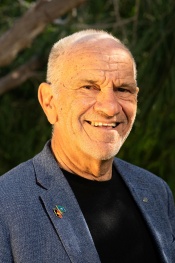
Emeritus Professor Dr Len Collard
Emeritus Professor Dr Len Collard is a highly respected Whadjuk Nyungar Elder and Traditional Owner of the Perth Metropolitan area and surrounding lands, rivers, swamps, ocean and culture. His academic appointments include a Doctor of Education Honors Causa - Edith Cowan University, Emeritus Professor, School of Indigenous Studies - University of Western Australia, Adjunct Professor at Nulungu Research Institute - University of Notre Dame and AIATSIS Council elected member.
As Director of Moodjar, he has focused his life’s work on explaining how and why Aboriginal place names continue to provide collective insights into our shared land. After studying literature and communications, Len spent his career recording and reclaiming Aboriginal language and culture. Len conducted several Nyungar language preservation studies as Australian Research Council Chief Investigator at the School of Indigenous Studies at the University of Western Australia, with his primary project, to uncover Nyungar placenames. He created a public database of 25,000 Nyungar words for South-West Australia and the first bilingual Aboriginal Wikipedia.
Len helps corporations, non-profits, federal, state and local governments with heritage and language preservation, Aboriginal interpretive plans, community engagement, statements of significance, Nyungar oral histories, policies, on-country tours, and cultural guidance through Moodjar - to support organisations with real aspirations for reconciliation.
In 2023, Len was acknowledged by Edith Cowan University with an honourary doctorate in Education for his lifetime contribution to education and Indigenous heritage. That same year, UWA appointed Len as Emeritus Professor – the first Aboriginal Emeritus Professor in the institutions’ history. Len was also acknowledged as a WA Nominee Local Hero in the Australia of the Year 2022 awards
10:45am Emeritus Professor Alan Lester, Britain's Contested Pasts: Lessons From and For Australia.
10:45 - 11:30am
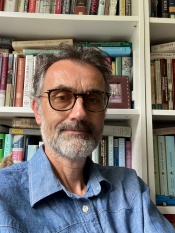
Emeritus Professor Alan Lester
Alan Lester is Professor of Historical Geography at the University of Sussex, UK and former Adjunct Professor of History at La Trobe University. He has been researching, writing and teaching about the British Empire for over thirty years and has recently been engaged in some of the most contested episodes in the public culture war over Britain's imperial past. He is editor of The Truth About Empire: Real Histories of British Colonialism (2024) and author of Deny and Disavow: Distancing the Imperial Past in the Culture War (2023) as well as author of numerous academic monographs on British imperial governance, humanitarianism and settler colonialism.
11:30 am Associate Professor Carol Dowling. Find One of Your Own Kind: Aboriginal Women's Stories as Counter-History
11.30am -12pm
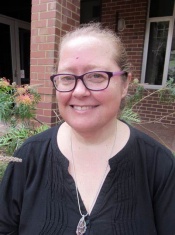
Associate Professor Carol Dowling
Associate Professor Carol Dowling (PhD) is a Badimia (Yamatji) anthropologist, writer and scholar whose work centres Aboriginal women’s histories, family memory and Indigenous research methodologies. Her research explores how oral traditions, community knowledge and family stories challenge and enrich conventional historical narratives. With more than 30 years' experience in Indigenous higher education, leadership and community development, she has worked across Curtin University, Edith Cowan University and the University of Western Australia. A two-time Australian Human Rights Commission award-winning radio documentary producer, Carol is recognised nationally for her contributions to truth-telling, Indigenous scholarship and community-led research.
12pm Q&A
12-12.15pm
Q&A with audience chaired by Professor Jane Lydon
12:15pm Lunch
12.15-1.15pm
Catered lunch.
1:15pm Amanda Nettelbeck, Our Common Bond: Citizenship and the assimilative vision of equality in settler Australia
1.15-1.45pm
Abstract
Possibly one of the most intractable obstacles to reconciliation in Australia is our public faith in the idea of equal citizenship. As has often been pointed out, the concept of formal or ‘democratic’ equality holds another meaning from that of ‘substantive’ equality. While democratic equality anticipates the ideal ‘of equal citizens relating in an equal society’, ‘equality in substance’ is a more dynamic and multidimensional concept that can look quite different.1 Clearly, having access to citizenship is not synonymous with having access to equality. Notably, when Australia’s Nationality and Citizenship Act came into effect on Australia Day in 1949, Indigenous people became citizens who were still subject to unequal laws that allowed Protectors to remove their children from their care, to hold their wages in trust, and to determine where they could live and work.
In contemporary Australia, the structural legacies of settler colonisation continue to vex the language of equality as a core feature of citizenship and its public projection as ‘our common bond’. This paper revisits how recent calls to redress the histories of Indigenous injustice in Australia became entangled with a public discourse about equality in citizenship. It looks back to the nineteenth century to consider the assimilative vision of equality that underpins Australia’s colonial history, then forward to the present day to consider how that assimilative vision remains embedded in the ‘values’ component of the Australian Commonwealth’s citizenship test.
Amanda Nettelbeck
Amanda Nettelbeck is a professor of History at Adelaide University. Her latest book is Unsettled Subjects: Race, Mobility and Colonial Citizenship in the Australian Settler Colonies (Cambridge UP, 2025). Her previous book, Indigenous Rights and Colonial Subjecthood (Cambridge UP, 2019) won the 2020 ANZLHS Legal History prize.
1:45pm Shino Konish, The Voice Referendum and Competing Claims to History
1.45-2.15pm
Abstract
Since the 1980s, when activists declared that “white Australia has a black history”, Aboriginal and Torres Strait Islander peoples have demanded truth-telling about colonisation and its continuing legacies. By the late 1990s, truth-telling was promoted as essential to reconciliation; it could only be achieved by first coming to terms with our shared history. This project, however, exposed a deep schism. While many welcomed acknowledging Australia's dark colonial past and the enduring impacts of this history on First Nations people, others regarded such historiographic narratives as an assault on Australia’s British inheritance. In the early 2000s this schism divided historians, politicians and the public over how to interpret contested aspects of Australia’s past, namely colonisation, frontier violence, and the removal of Aboriginal children. More recent history wars erupted in the 2010s over pre-colonial economies and the need for constitutional recognition. As Donald Wright observes, Australia’s ongoing history wars “are nasty and brutish but never short" for they are recurring and fought on multiple fronts. These disputes have increasingly been played out on the public stage, intensifying the politicisation and polarisation of Aboriginal history. This presentation will trace how competing interpretations of Australia’s past became entangled with questions over Indigenous rights and recognition, and how Australia’s contested history was mobilised in the lead up to the 2023 Voice referendum.
Shino Konishi
Shino Konishi is a Yawuru historian based at the School of Humanities and School of Indigenous Studies at the University of Western Australia. She is an ARC Future Fellow, researching Western Australia’s Aboriginal history, and is the general editor of the Indigenous Australian Dictionary of Biography.
2:15pm Vanessa Russ. Discussant
2:15 – 2:30pm
Vanessa Russ. Discussant
2:30pm Afternoon tea
2.30-2.45pm
Break for afternoon tea.
2:45pm Jane Lydon, Small Stories: Historical injustice and family lines
2.45-3.15pm
Abtsract
The global movement for historical justice is one of the most significant moral and social developments of our times. Calls to acknowledge and redress historic wrongs have increased and are now often regarded as a responsibility of the state, even when the injustice occurred in the distant past under a different regime. Today I ask why we might owe anything to the past, and how we might respond. Some suggest that calls for reparations for historic wrongs differ from demands for social justice – and may even displace them. However philosophers such as Duncan Ivison argue that membership of a political community entails ties to others which are shaped by the past. Similarly Janna Thompson argues that structured intergenerational communities are obliged to repair historical injustices. Australians have seen state and institutional attempts to address historic wrongs - such as apologies, Truth and Reconciliation Commissions and truth-telling inquiries. Yet at a grassroots level, many personal responses have stemmed from individuals seeking to explore their own family histories, and their complicity in past processes such as colonisation: family lines have emerged as vehicles for both victims and advocates for repairing injustice. The pursuit of ancestors and family history research offers ‘small stories’ (Shaw 2025, Bell 2017) which connect more and more people to history, creating emotional connections and acting to both unsettle and anchor.
Jane Lydon
Jane Lydon is Wesfarmers Chair of Australian History at the University of Western Australia. Her research centres upon Australia’s colonial past and its legacies in the present. She is a white settler scholar who aims to carry out politically located research that respects Indigenous sovereignty. She co-edited, with Zoë Laidlaw, Legacies of British Slavery in Australia and New Zealand (Manchester University Press, 2026).
3:15pm Zoe Laidlaw, Truth-telling, justice and implication: Victoria’s history in the 2020s
3.15-3.45pm
Abstract
On 25 June 2025, the Yoorrook Justice Commission delivered its final report, Yoorrook Truth Be Told, and five months later the Statewide Treaty Act 2025, or ‘Treaty for Victoria’, was signed between the First Peoples of Victoria and the state government. Written ‘in the tradition of First Peoples’ approach to storytelling’, Yoorrook Truth Be Told offered a history of Victoria since colonisation, ‘a reclamation of Victoria’s past that privileges voices and stories previously overlooked or deliberately suppressed’. This paper considers how historical scholarship can support truth-telling in Victoria. And, as the bicentenary of the 1834 invasion of Victoria approaches, it assesses non-Indigenous Victorians’ responses to histories that centre the harms of colonisation and highlight colonisation’s ongoing implications.
Zoë Laidlaw
Zoë Laidlaw is Professor of History at the University of Melbourne. A non-Indigenous Victorian who grew up on Gunditjmara Country, her current research focuses on the legacies of slavery in Victoria, the colonisation of the Port Phillip District, and the relationship between colonialism and philanthropy. She co-edited, with Jane Lydon, Legacies of British Slavery in Australia and New Zealand (Manchester University Press, 2026).
3:45pm Kate Gregory, Dialogues 2029: a role for public history and new collection practices
3.45-4.15pm
Dr Kate Gregory
Dr Kate Gregory is Head of Research and Interpretation at the State Library of Western Australia. Kate’s PhD was on Australian art and museum practice since 1970 (University of Melbourne, 2004). Her postdoctoral research was on West Australian heritage histories at Curtin University. Kate has served as Trustee of the Western Australian Museum (2012–2018) and is currently on the Australian Dictionary of Biography WA working party, and the WA History Foundation council and the History Council of WA.
4:15pm Ann Curthoys. Discussant
4.15-4.45pm
Emeritus Professor Ann Curthoys
Ann Curthoys writes about class, race, gender, and colonialism in Australian history. She is the author of Freedom Ride: A Freedom Rider Remembers (2002); co-author with Jessie Mitchell of Taking Liberty: Indigenous Rights and Settler Self-Government in Colonial Australia, 1830 – 1890 (2018), and co-author with Shino Konishi and Alexandra Ludewig of The Lives and Legacies of a Carceral Island: A Biographical History of Wadjemup/Rottnest Island (2022). Her most recent book The Last Tour: Paul and Eslanda Robeson’s visit to Australia and New Zealand was published in 2025. She is professor emerita at the Australian National University and is affiliated to the University of Western Australia and the University of Sydney.
4:45pm Wrap up
4.45 - 5pm
Wrap up with Jane Lydon
Related Exhibition

Kinjarling Djinnang Ngalak
Country Sees Us
–
An immersive exhibition centred around newly recorded video oral histories of Menang Elders and a large-scale visual meditation on the Kinjarling/Albany landscape.